

Upcoming Gods
Every 2 weeks a new god and its flavor
will arrive to the pantheon.
While the pantheon expands, the world grows smaller for your future voyages
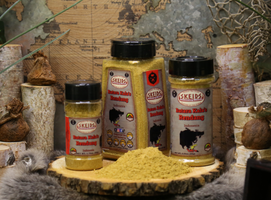
Batara Kala's Rendang
Release Date: 9/7/2026
Rendang was born in the Minangkabau kitchens of West Sumatra, where patience was never optional. Coconut, aromatics, spice, and meat could spend hours over the fire, slowly reducing until what began soft and fragrant became dark, concentrated, and deeply woven together. Time did not simply cook Rendang; it transformed it, and that transformation is what Skeids wanted Batara Kala to carry.
Batara Kala’s Rendang begins rich and familiar, but the longer it stays with you, the more it seems to deepen. Warmth builds beneath the surface, coconut softens the edges, and the darker savory notes give ordinary meat, rice, or vegetables the feeling of something that should have taken far longer to create. This is the jar for when dinner needs the soul of an all day meal, even when the clock says you do not have all day.
Batara Kala was associated with time itself, a force that eventually changes everything it touches. Few foods understand that better than Rendang. Given enough time, simple ingredients lose the shapes they began with and become something richer than any of them could have been alone. Batara Kala does not merely belong beside Rendang; time is already hiding inside the bowl.
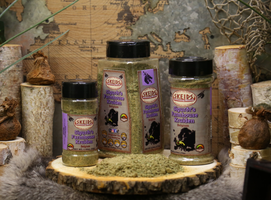
Sigurðr's Farmhouse Kruiden
Release Date: 9/21/2026
Belgium may be famous for grander things, but the farmhouse kitchen has always had its own kind of wealth. A pot on the stove, something roasting nearby, herbs drying within reach, and food sturdy enough to carry everyone through the day rarely needed much ceremony. Sigurðr’s Farmhouse Kruiden was built for that world, where warmth comes slowly and the seasoning seems to sink into the meal rather than sit on top of it. It gives everyday cooking that weathered, countryside character that makes a simple supper feel as though it came from an older kitchen with a much heavier table.
Sigurðr is remembered for dragons, treasure, and deeds large enough to survive a thousand years of storytelling, yet even heroes returned eventually to the hearth. There is something fitting about placing such a legendary name on a blend that refuses to behave like one; Farmhouse Kruiden is humble, dependable, and far more interested in making dinner satisfying than making itself impressive. Sigurðr earns his place in the cabinet because not every meal needs an adventure. Sometimes the hero simply needs to come home hungry.
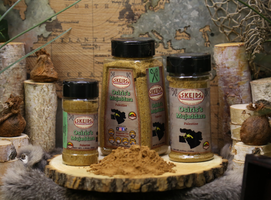
Osiris's Mujaddara
Release Date:10/5/2026
There is an old wisdom in knowing when a meal does not need much to feel complete. Mujaddara has carried that wisdom through Palestinian kitchens for generations, turning humble lentils, grain, and deeply browned onions into the kind of food that could fill a home long before it ever tried to impress a guest. Osiris’s Mujaddara keeps that quiet richness alive, earthy and savory with a warmth that seems to have spent hours beside the stove even when dinner has not. It belongs in the cabinet for the nights when rice, potatoes, vegetables, or a simple pot of lentils need to feel less like ingredients and more like supper.
Osiris comes from farther south along the Nile, yet his story rests on an ancient truth Mujaddara understands well: life begins in the earth, disappears beneath it, and returns as something that can feed us. He was tied to fertile soil, grain, renewal, and the promise that what was planted would rise again. A dish built from seeds, patience, and ordinary things becoming deeply nourishing feels strangely at home beneath his name. Osiris does not make Mujaddara grand; he reminds us why humble food never needed grandeur in the first place.
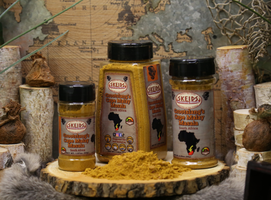
Grootslang's Cape Malay Masala
Release Date: 10/19/2026
They say the Grootslang still sleeps beneath South Africa, curled around treasure hidden so deep that only the foolish would go looking for it. But not every treasure glitters. When people were carried across the Indian Ocean to the Cape, many arrived with little more than memories of home, and among those memories were the tastes and aromas they refused to leave behind. Generations worked those memories into a new South African voice, and Cape Malay cooking became proof that something taken far from home could still grow roots somewhere new.
Grootslang’s Cape Malay Masala carries that same buried richness. The warmth feels familiar at first, then keeps opening, one layer after another, until chicken, lamb, rice, vegetables, or an ordinary pot on the stove suddenly feels like it has a much longer story behind it. It never needs overwhelming heat to make itself known; the reward is in discovering what was hiding underneath. Maybe the old Grootslang was guarding the wrong treasure all along.
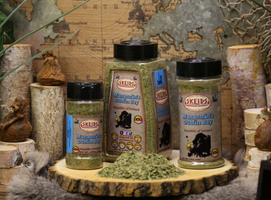
Manannán's Dublin Bay
Release Date: 11/2/2026
Stand near Dublin Bay when the wind is coming off the water and Ireland seems to change character. The air turns sharp and clean, the green of the land feels brighter beside the gray sea, and somewhere between the two is the kind of quiet that makes you understand why coastal food never needed to be complicated. Manannán’s Dublin Bay grew from that edge of Ireland, carrying enough herb and ocean to make a meal feel fresher without burying whatever was already on the plate. It is the jar for when dinner feels heavy, tired, or simply too ordinary and needs a little salt air blown through it.
Manannán mac Lir was the old Irish lord of the sea, moving through mist and water as though the boundary between worlds belonged to him alone. A blend born beside Dublin Bay could hardly ask for a better keeper. Manannán does not drag the ocean onto the plate; he leaves just enough of it behind that, for a moment, the kitchen feels a little closer to the shore.
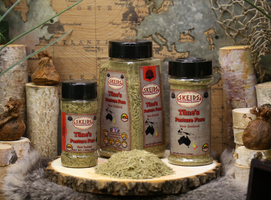
Tane’s Pasture Fare
Release Date: 11/16/2026
New Zealand’s pasture country has a flavor all its own, where lamb grazes beneath open skies and the meal often feels at its best when the seasoning lets the land stay recognizable. Tāne’s Pasture Fare was imagined from that landscape: green, windswept, and sharp enough to cut through the richness of a roast without covering the reason you wanted it in the first place. The flavor carries the feeling of herbs crushed beside the kitchen door, fresh air blowing through an open window, and supper coming in from the fields. It is the jar for food that already has substance but needs something lively enough to lift it, turning a heavy plate into one that somehow feels fresher with every bite.
Tāne belongs to the living green of Aotearoa. In Māori tradition he is the atua of forests and birds, the one who separated earth and sky and allowed light to enter the world between them. That image gave Pasture Fare its soul: earth below, open sky above, and everything green reaching into the space between. Tāne does not bring weight to the meal; he brings the breath of the field back with it.
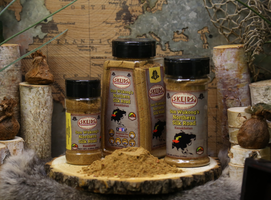
Sun Wukong's Northern Silk Road
Release Date: 11/30/2026
The Silk Road never moved in a straight line. Across what is now Kazakhstan, caravans crossed enormous stretches of steppe carrying more than silk with them, and every stop gave flavor another chance to change hands. Sun Wukong’s Northern Silk Road was imagined somewhere along that journey, where the deep warmth of Central Asia meets a brighter, almost electric edge traveling west from China. The first taste feels grounded and familiar, then suddenly something tingles, something warms, and the road seems to turn beneath you again. It gives an ordinary pan of food the feeling that it has traveled far beyond the kitchen, which is exactly why this jar refuses to be just another “Asian seasoning.”
Sun Wukong never belonged to Kazakhstan, and that is almost the point. The Monkey King was a traveler, trickster, and restless force whose story in Journey to the West was built around crossing impossible distances and coming back changed by everything encountered along the way. Northern Silk Road carries that same refusal to stay in one place, beginning with one culinary world and letting another interrupt before the journey is finished. Wukong belongs here because this blend is not trying to represent a single kitchen; it is trying to capture what happens when the road itself becomes part of the flavor.
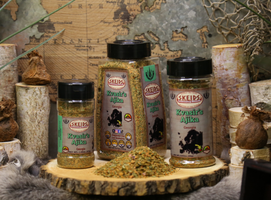
Kvasir's Ajika
Release Date: 12/14/2026
Ajika was never meant to whisper from the edge of the plate. In the kitchens of Georgia, it became a way of taking the sharpness of pepper, the fragrance of herbs, and the warmth of the earth and pounding them together until they stopped speaking as separate voices. Kvasir’s Ajika keeps that restless character alive, beginning bright and green before a deeper warmth starts climbing underneath, lingering just long enough to make the next bite feel inevitable. It is the kind of jar that can wake up grilled meat, potatoes, eggs, rice, or whatever plain dinner happened to become that night, giving familiar food a pulse without burying what was already there.
Kvasir was born from a gathering of the gods and carried the wisdom of them all, as though many voices had somehow learned to speak through one. Ajika feels much the same way: nothing truly disappears, yet once everything comes together it becomes difficult to imagine separating it again. There is fire in Kvasir, but there is thought behind the flame, a blend that knows exactly when to speak louder and when to let the meal answer back. Perhaps that is why Ajika fits him so naturally; both became something greater because many different voices agreed, for once, to become one.
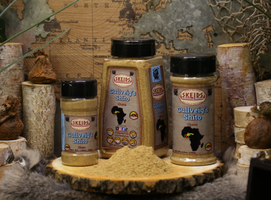
Gullveig's Shito
Release Date: 12/28/2026
Some flavors are born beside the fire, but Shito seems to ask the fire to stay awhile. In Ghana, its character comes from patience: heat, savory depth, and powerful aromas slowly surrendering into one another until the darkness itself becomes part of the flavor. Gullveig’s Shito carries that same spirit into a dry blend, beginning deeply savory before the heat rises and refuses to leave, with a richness underneath that keeps it from ever becoming just another hot seasoning. A little can make something as simple as rice, eggs, noodles, meat, or vegetables feel finished before the rest of dinner has caught up. It earns its place in the cabinet not because it burns, but because there is so much waiting beneath the flame.
Gullveig knew something about surviving fire. The old Norse tales remember her being pierced, burned three times, and returning three times, each flame failing to erase what stood inside it. Shito feels almost born from the same stubbornness; heat does not destroy its character, it deepens it. Gullveig belongs here because some things only reveal how much they carry after the fire has done its worst. ||br|| Used in these Skeids recipes: ||br|| **Seafood Pasta** https://skeids.com/products/seafood-pasta
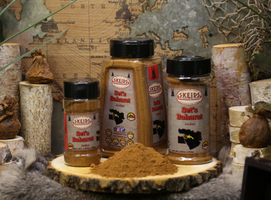
Set's Baharat
Release Date: 1/11/2027
The name almost undersells it. Baharat simply means “spices,” yet across Jordan that simple word can open the door to a whole world of warmth, shaped by family kitchens, old trade roads, and the countless hands that carried spice through the region long before anyone thought to put it in a jar. Set’s Baharat leans into that older feeling, deep and peppery with a warmth that keeps unfolding instead of rushing forward, as though each taste has another market stall hiding behind it. It can take an ordinary meal and give it the kind of depth that feels traveled, the reason this becomes less a specialty jar and more the one you reach for when dinner needs a little more history in it.
Set was born for landscapes where the wind could erase yesterday’s footprints before morning. God of the desert, storms, and the untamed places beyond the fertile ground, he carried the danger and mystery of roads stretching into the unknown. Jordan has spent centuries standing along those roads, where caravans, kingdoms, and cultures passed through and left traces behind. Set’s Baharat feels like something gathered from that journey: warm, ancient around the edges, and just wild enough to remind you that the safest road was rarely the one with the best story.
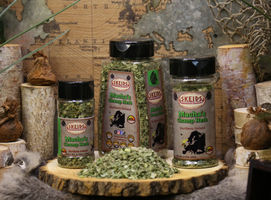
Macha’s Champ Herb
Release Date: 1/25/2027
Champ was never meant to be fancy. It is Northern Ireland in a bowl: potatoes, chives, butter, warmth, and the kind of meal that proves comfort never needed ceremony. Macha’s Champ Herb began there, not by trying to recreate the whole dish in a jar, but by capturing that fresh savory lift that makes a plain potato suddenly feel like supper. A shake over warm potatoes is the obvious homecoming, yet that same brightness slips easily through eggs, vegetables, cream sauces, or whatever dinner needs waking up without changing what made you want it in the first place.
Macha’s name is woven into Ulster itself, carried through old stories and the ancient name Emain Macha. She was fierce, rooted to the land, and far too powerful to be mistaken for something delicate, which makes her an oddly perfect guardian for one of Northern Ireland’s simplest comforts. Champ reminds us that food does not have to be grand to be remembered, and Macha belongs in the cabinet for the same reason: sometimes the humblest meal only needs a little help becoming the one everyone reaches back for.
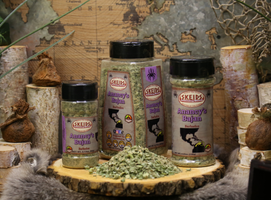
Anancy's Bajan (Barbados)
Release Date: 2/8/2027
Barbados is a small island, but small places have never meant small stories. Too many ships have crossed those waters, too many people have arrived carrying memories of somewhere else, and too many generations have added their own chapter for Bajan cooking to have only one beginning. Eventually the old stories stopped asking where every piece came from. They simply sat down together at the same table and became Barbados.
That is how Anancy’s Bajan feels to us. At first there is something green and familiar, like herbs crushed between your fingers while supper is already cooking nearby. Then the island begins showing itself. A little brightness slips through, something savory follows, and eventually warmth starts creeping in from the edges. Not the kind of heat trying to prove anything, just enough to remind you that the Caribbean sun has been watching through the window the entire time. Before long, all those different voices have tangled together so completely that trying to separate them would miss the point. ||br|| ||br|| And old Anancy would probably understand that better than most. The spider trickster of West African and Caribbean stories, Anancy has spent generations spinning webs with more than silk, weaving lessons, mischief, humor, and survival into every tale. His stories crossed an ocean long before this jar ever did. They changed accents, picked up new characters, lost a detail here, gained another there, and still somehow everyone knew who had spun the tale. That is the curious thing about a spider’s web: no single strand looks like much by itself, but let enough of them cross and suddenly they can hold something far greater than any one thread. Barbados learned how to do that with culture. Anancy simply learned it first.
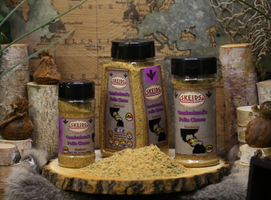
Comizahual's Pollo Chuco
Release Date: 2/22/2027
Pollo Chuco grew up on the streets of San Pedro Sula, where crisp fried chicken, green banana slices, slaw, sauces, and whatever each cook swore made theirs better could turn a sidewalk into the best table in town. Comizahual carries that same restless character: savory and bright at first, then tangy, herbal, and warm enough around the edges to keep the next bite calling. It was never meant to imitate every sauce and topping on the plate; it captures the part that makes Pollo Chuco feel alive, giving plain chicken, fries, or whatever dinner became that night the feeling that it wandered through San Pedro Sula before reaching your kitchen. This is the jar for when ordinary food needs a little street in its soul.
Comizahual comes from a much older Honduran story, remembered in Lenca tradition as a wise matriarch, warrior, and almost mythical flying jaguar who watched over her people. There is something fitting about letting such an old Honduran spirit walk beside one of the country’s younger street-food traditions. Centuries may separate their stories, but both survived because Hondurans kept carrying them forward. Comizahual gives the old jaguar another road to travel, this time following the smell of fried chicken through the streets.
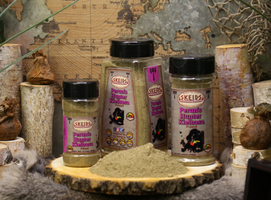
Perun's Hunter Kielbasa
Release Date: 3/8/2027
Hunter Kielbasa was made for food that could leave the kitchen behind. In Poland, the old hunter’s sausage carried smoke, strength, and enough deep savory character to travel into the forest and still taste like something worth coming home to. Perun’s Hunter Kielbasa captures that same rugged feeling, as though juniper-covered woods, a distant smokehouse, and the earth beneath the trees somehow followed the hunt back to the table. The flavor settles deep rather than shouting, giving meat, potatoes, or a hearty pan dinner the slow woodland richness of something cooked beside a fire even when the stove did all the work.
Perun was the Slavic lord of thunder, storms, and the oak, a god whose presence belonged naturally above those same forests. There is something fitting about giving his name to a blend where smoke hangs low, the woods remain close, and strength comes without needing fire for the sake of fire. Perun earns his place in the cabinet for nights when dinner needs to feel a little more rugged, a little older, and as if the storm stayed outside while the hunter finally made it home.
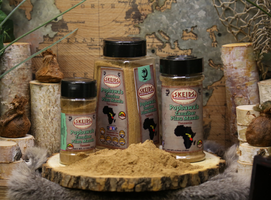
Popbawa's Zanzibar Pilau Masala
Release Date: 3/22/2027
Popbawa’s Zanzibar Pilau Masala carries the kind of aroma that feels like it belongs to the island air itself, warm, spiced, and impossible to ignore. Cardamom leads the way first, followed by the dark richness of clove, the soft glow of cinnamon, and the grounding pull of cumin, while coriander, ginger, fennel, and black pepper keep the whole blend moving instead of sitting heavy. It is not a harsh heat blend, but a deep and fragrant one, built to give rice, stews, seafood, and meats that full pilau character where every bite feels seasoned all the way through. This is the sort of spice profile that turns a simple pot into something ceremonial, rich with warmth and layered with old coastal memory.
We chose Popbawa for this one because Zanzibar carries a folklore all its own, where the night feels alive and stories move just as easily as spice on the wind. Popbawa is one of the island’s most infamous spirits, a presence tied to darkness, mystery, and the uneasy power of the unseen. That felt right for a blend like this, because pilau masala has that same kind of presence—it arrives in fragrance before the food ever reaches the table, and once it’s there, it owns the room. Popbawa may be feared in legend, but here the name becomes something magnetic: the spirit of Zanzibar, transformed into spice.
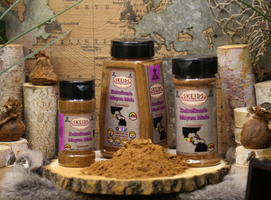
Kukulkan's Mayan Mole
Release Date: 4/5/2027
Before chocolate ever became something sweet, cacao already carried meaning through the Maya world, alongside maize, squash seeds, tomatoes, and chiles that fed generations long before Guatemala had its modern name. Those old flavors never vanished; they kept changing hands, meeting new ingredients, and finding new ways onto the table. Kukulkan’s Mayan Mole grew from that meeting of worlds, imagining toasted seeds and maize beside the fire while dark cacao settles underneath the warmth like a shadow, deepening the flavor without ever turning dinner into dessert. The result feels earthy, roasted, and almost ancient, with a gentle chile warmth that slowly opens rather than burns. Give it a simple piece of chicken, pork, rice, or a sauce and suddenly dinner carries the kind of depth that normally feels like it should have taken half the day to build. This is not the jar for when food simply needs more seasoning; it is the jar for when dinner needs another story hiding underneath it.
Kukulkan himself traveled through the Maya world much the same way. The feathered serpent carried different names as cultures and languages changed, with the Maya of Guatemala remembering his counterpart as Gucumatz, yet the old image of serpent, wind, rain, creation, and life endured. That made him fitting for a blend where an ancient culinary foundation survives beneath everything that came afterward. The serpent may shed its skin as the centuries pass, but something older always remains underneath.
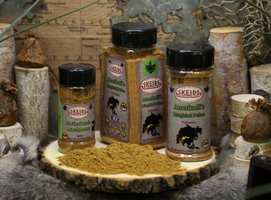
Anarkali’s Mughlai Pulao
Release Date: 4/19/2027
Some meals seem to remember a time when dinner was expected to make an entrance. Mughlai Pulao is one of them. Long before Pakistan carried its modern name, pulao had traveled into the subcontinent and found its way into Mughal kitchens, where rice became a canvas for fragrance, warmth, and the kind of spice that announced itself through the room before anyone ever lifted a spoon. Generations later, those old courtly flavors still linger in Pakistani kitchens, especially around Lahore, where the Mughal past never feels very far away.
Anarkali’s Mughlai Pulao begins the same way, with aroma arriving before the flavor fully reveals itself. There is something almost regal about the warmth, rich without feeling heavy, fragrant without becoming perfume, with one layer quietly stepping aside so another can pass through. A little warmth eventually rises from underneath, but this was never meant to be a blend that conquers the meal with fire. It carries itself more like an old banquet, where richness came from how many small details could share the same table without any one of them needing the throne.
And somewhere in Lahore, the name Anarkali has survived nearly as stubbornly as the flavors of the Mughal world around her. History and legend have tangled her story together so completely that no one can cleanly pull them apart anymore: a woman remembered for beauty, forbidden love, a prince, an emperor, and a tragedy whispered through generations until Lahore itself refused to forget her. Whether every part happened exactly as the old tale tells it almost matters less than the fact that people kept telling it.
That is why Anarkali belongs here. Mughlai Pulao needed someone who felt at home beneath the glow of a court rather than on the battlefield outside it, someone whose story carried beauty, richness, mystery, and just enough sorrow to survive long after the empire around her changed. Some flavors disappear when the kingdom that created them is gone. Others leave the palace, find another kitchen, and somehow keep the story alive.
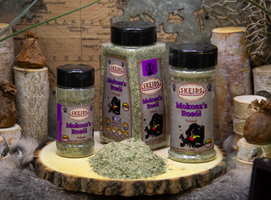
Mokosz's Rosół
Release Date: 5/3/2027
In many Polish homes, Sunday has a smell, and Rosół is often part of it. A pot begins quietly, then little by little the kitchen fills with the kind of warmth that tells everyone dinner is taking its time and will be worth waiting for. Mokosz’s Rosół was built around that feeling, soft and savory with the familiar comfort of vegetables, herbs, and broth seeming to settle into one another until the edges disappear. It gives an ordinary pot of chicken, noodles, potatoes, or rice the memory of something that has been simmering far longer than it really has. Mokosz belongs in the cabinet for the nights when you want the comfort of Sunday dinner without needing all of Sunday to make it.
Mokosz was the old Slavic goddess tied to the earth, fertility, and the work that kept a household alive from one season to the next. Rosół feels as though it grew from that same quiet kind of care, made from simple things that become more nourishing simply because someone gave them time. She does not belong here because the meal is grand; she belongs because a warm bowl placed in front of someone you love has always been its own small kind of abundance.
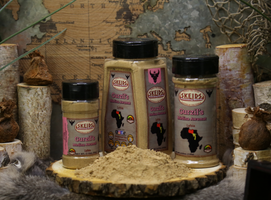
Gurzil's Medina Awamat
Release Date: 5/17/2027
Follow the narrow streets of an old Libyan medina long enough and eventually something sweet should find you. Awamat are little pieces of fried dough made dangerous by the fact that one is never enough, crisp outside, soft within, and finished beneath enough syrup or honey to make your fingers part of the experience. Gurzil’s Medina Awamat takes the memory of that sweet and lets it wander beyond the pastry, carrying honeyed warmth, bright citrus, and an old aromatic spice character that can make something as simple as warm bread or a bowl of popcorn suddenly smell like dessert is being made somewhere nearby. This is sweetness with a story behind it, familiar enough to comfort but different enough that most American cabinets have nothing quite like it.
And Gurzil comes from a Libya far older than the medina streets themselves. An ancient Berber deity remembered beside the image of the bull and even carried into battle, his name survived long after the people who first called upon him were gone. There is something fitting about placing that ancient name beside a humble sweet still passed around when people gather. Libya has known war gods and honeyed pastries, stone ruins and warm kitchens; Gurzil’s Medina Awamat simply lets a little of all that history share the same jar.
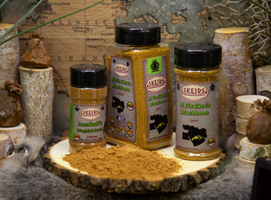
Al Fisaikra's Machboos
Release Date: 5/31/2027
Long before you ever see the pot, Machboos has already filled the house. Something warm hangs in the air, something deeper underneath it, and every so often a sharp little brightness cuts through just enough to make you wonder what is waiting in the kitchen. In Qatar, that aroma has followed families for generations, but it never seems to tell exactly the same story twice. One home remembers it one way, another adds something their grandmother always used, and somehow every version still knows where it belongs. That was what brought Skeids to Machboos. We did not want the one perfect recipe; we wanted the feeling of a recipe that had lived long enough to have a family.
Al Fisaikra carries that feeling slowly. She begins warm, almost comforting, then a darker citrus note wanders through like something dried beneath the Gulf sun before finding its way back into the pot. The deeper warmth follows behind it, patient and familiar, until the whole thing begins to feel less like individual flavors and more like the smell of dinner arriving from another room. It is not loud food. It is the kind that has been waiting for you.
Maybe that is why Al Fisaikra feels so at home for Machboos. Her own story survived because someone told it, then someone else remembered enough to tell it again. Over time the voices changed, little details wandered, but the heart of the tale kept finding its way back. Machboos lives much the same way, carried from one kitchen to another until memory becomes part of the recipe itself. Some traditions are written down so they will never change. Others remain alive because a family never stops telling the story.
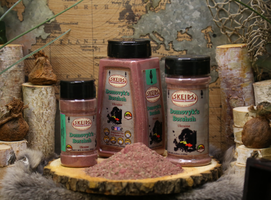
Domovyk’s Borshch
Release Date: 6/14/2027
There are dishes you eat, and there are dishes that seem to remember everyone who cooked them before you. Borshch belongs to the second kind. Across Ukraine, one family may swear by something another would never put in the pot, yet somehow the first spoonful still carries that unmistakable feeling of coming home. Domovyk’s Borshch was built around that memory: deep and earthy, warmly savory, with a quiet tang underneath that keeps the richness alive. It can settle into potatoes, meat, vegetables, or a simple pot on the stove and make an ordinary dinner feel like it has been gathering flavor since morning.
And perhaps no name could have belonged there more naturally than Domovyk. The old household spirit was said to remain close to the family, watching over the home, its hearth, and the generations passing through its doors. If Borshch is the pot that remembers the family, Domovyk is the spirit that remembers the house. Some jars are kept in the cabinet because they make food different; Domovyk belongs there because sometimes you want dinner to feel familiar before you have even tasted it.
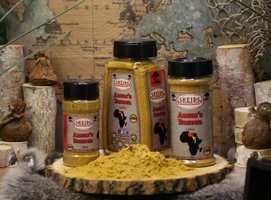
Anzar's Bazeen
Release Date: 6/28/2027
Bazeen comes from a side of Libyan cooking where humble ingredients were never treated as humble food. Barley, meat, vegetables, and a deeply seasoned broth could become something heavy with comfort, built to feed the people gathered around it rather than impress anyone watching from outside. That spirit is why Bazeen earned a place in Skeids: it proves that depth does not need extravagance, only the right warmth given enough room to settle in. Anzar carries that warmth into everyday cooking, earthy and savory at first, then slowly unfolding until even a simple pot of meat, potatoes, vegetables, or rice feels as though someone gave dinner far more time than you actually had.
Anzar was the ancient Amazigh bringer of rain, carrying the promise that dry ground could wake again and provide for the people depending on it. His story felt naturally at home beside Bazeen, a meal shaped by the same belief that what the land gives can become enough when treated with care. Anzar does not need to transform dinner into something unrecognizable; he simply gives what is already there more warmth, more depth, and another reason for everyone to stay at the table a little longer.
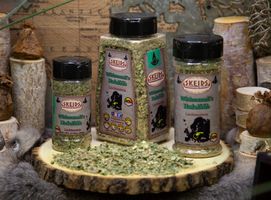
Wildmannli's Hafalääb
Release Date: 7/12/2027
Hafalääb nearly slipped out of Liechtenstein’s memory altogether. Born in Balzers, the old dish begins humbly with cornmeal and flour worked into hand-shaped dumplings, gently cooked and often given one last turn in butter before reaching the table. It sits somewhere between a dumpling, a pizokel, and a gnocchi, simple mountain food that could lean savory or sweet depending on what the household had waiting beside it. Wildmannli’s Hafalääb takes the savory road, pulling that cornmeal comfort into a darker Alpine kitchen where smoke hangs in the timber and the evening meal carries the warmth of herbs, earth, and a fire that has been burning since before the cold came down from the peaks. It is the kind of flavor that can make an ordinary supper feel sturdier, warmer, and somehow better suited to a mountain night.
And if an almost forgotten dish needed a guardian, Liechtenstein already had one hiding in the mountains. The Wildmannli were shaggy little figures of local legend who came down from their caves to tend the cattle when the farmers had too much work of their own, strange helpers who belonged as much to the Alpine landscape as the people telling their stories. One tale even has their discarded charcoal turning to silver coins, which feels wonderfully appropriate for Hafalääb: something humble enough to overlook until you discover there was treasure hiding in it all along. Wildmannli keeps that old mountain meal from disappearing completely, carrying a little smoke from the hearth and a little folklore from the peaks into a jar that proves forgotten food can still find its way home.